You probably know what a good breakfast looks like. The trouble is 7:40 am. The tiffins are not packed, someone cannot find a sock, and the easiest breakfast is a cup of chai and two biscuits standing at the counter. Or nothing at all.
The answer is rarely a new recipe. It is a routine that makes the decision before the morning starts. Here is a simple one to try.
1. Pick five breakfasts and stop there
Choose five breakfasts your home already likes and repeat them every week. Repetition is not boring when it saves you twenty minutes of thinking.
A flexible planning guide: include a protein food, such as a pulse, curd, paneer or egg, and add a vegetable or fruit where practical. Grains such as roti, poha or daliya can round out the meal; you do not need to force the same combination into every breakfast. India's dietary guidelines explain that combining cereals with pulses gives a better mix of protein than either alone (ICMR-NIN Dietary Guidelines for Indians 2024, Guideline 8). Many of our traditional breakfasts already do this.
A sample week:
- Monday: besan vegetable chilla with curd. Besan is gram flour, made from chana, so it is a pulse, not a grain; add a roti or a slice of whole wheat bread if you want a grain alongside. Our besan vegetable chilla recipe is ready in about the time it takes to make chai.
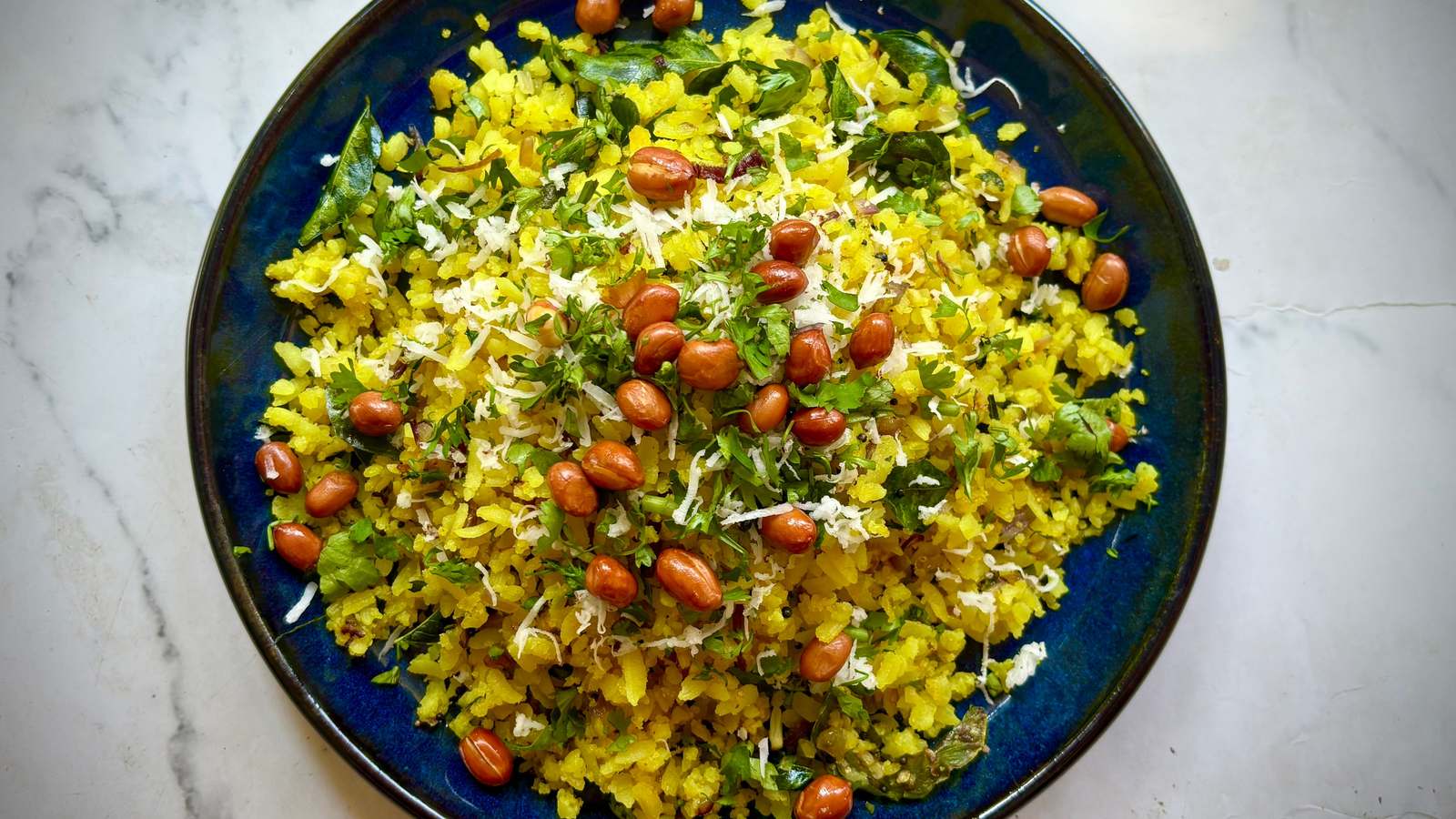
- Tuesday: vegetable poha with roasted peanuts and a bowl of curd.
- Wednesday: a chaat of thoroughly cooked sprouted moong (steamed or boiled until soft) or boiled chana, with onion, tomato, cucumber and lemon, and one roti or a slice of whole wheat bread.
- Thursday: vegetable daliya or upma with extra vegetables, plus a protein: a bowl of curd, a handful of roasted peanuts, or a spoon of boiled moong dal stirred in.
- Friday: egg bhurji with roti, or paneer bhurji if your home is vegetarian.
Swap any day for a regional favourite, such as idli with sambar or thepla with curd. Use the same flexible guide. If you want to check how much protein your usual breakfast gives, try the protein tool.
2. Do ten minutes the night before
Use the evening to choose breakfast, select the vegetables and start any soaking. Keep the vegetables whole and chop them in the morning.
- Soak chana the night before a chaat day, then boil or pressure-cook it until soft. Soaking only starts the job; it does not cook anything. If using already-sprouted moong, steam or boil it until it is thoroughly cooked before it goes into a chaat or tiffin. Food safety agencies advise against raw or lightly cooked sprouts, because the warm, humid conditions used to sprout seeds and beans also suit bacteria (US FDA, Selecting and serving produce safely; Health Canada, Food safety tips for sprouts). Health Canada asks children, older adults, pregnant women and people with weakened immune systems to take extra care.
- Select onion, tomato and capsicum the night before and keep them whole, stored appropriately for each vegetable. Wash and chop them in the morning, using a chopper to save time.
- Measure the poha, besan or daliya into a bowl, so morning preparation is quicker.
- Set out the pan, tawa and tiffin boxes.
Write the five breakfasts on the same sheet as your weekly menu. If you plan the week already, our post on planning family meals around your calendar shows how to fit breakfast into that plan.
3. Keep one 5 minute fallback
Some mornings nothing goes to plan. Decide your fallback now, so it is not biscuits by default.
A good fallback needs no morning cooking if the ingredients are ready: a bowl of curd with a whole fruit and a small handful of nuts, or a safely stored roti from last night with a prepared boiled egg or paneer. Keep perishable ingredients refrigerated and ready to use.
4. Choose whole fruit over juice, and read the label on packets
India's dietary guidelines suggest whole fruit rather than fruit juice (ICMR-NIN Dietary Guidelines for Indians 2024), and the WHO advises limiting free sugars, which include the sugars in fruit juice (WHO, Healthy diet fact sheet). A guava, banana or orange with breakfast gives you the fibre that juice leaves behind.
If a packaged breakfast cereal or bread is part of your week, let the label decide which one. Choose higher fibre or wholegrain varieties, with lower added sugar and lower salt. The NHS suggests a wholegrain, lower sugar cereal, and points out that about three quarters of the salt we eat is already in food when we buy it, including breakfast cereals and bread (NHS, Eight tips for healthy eating). India's guidelines also ask us to read food labels to make informed choices (ICMR-NIN, Guideline 17).
5. Let breakfast and the tiffin share the work
The same pan can make breakfast and lunch. Make extra chilla batter for a tiffin roll, or pack the leftover poha with a box of cut vegetables. Children's tiffins and your own get easier when they come from the same plan. If you are cooking for different ages and needs at home, the family meal planning service is built for that.
For lunch and dinner, the balanced thali tool carries the same idea further. Browse the kitchen for more everyday recipes.
Start next Monday
You do not need to start all five at once. Write down two breakfasts this week and do one night-before step. Add the rest as they become habit.
If breakfast is where your day already goes off track, bring your real week to a consultation and we will build a routine around it. Book a consultation or say hello on WhatsApp.
Richa works alongside your doctor, not instead of them. Nutrition guidance does not replace medical care.
Frequently asked questions
Is it fine to eat the same breakfast every week?
Yes. A fixed rotation of four or five familiar breakfasts still gives variety across the week, and it removes the daily decision. Change one dish when the season changes.
What if I am not hungry in the morning?
Start small, such as a fruit with curd or a handful of roasted chana, and have it at a regular time. If you have a health condition or take medicines, follow your doctor's advice on meal timing.
Is poha or upma a healthy breakfast?
They can be. On their own they are mostly grain, so add vegetables while cooking and pair them with a protein such as peanuts, curd, or thoroughly cooked sprouted moong.
Can I eat sprouts raw?
It is safer not to. Steam or boil sprouted moong until it is thoroughly cooked, and boil or pressure-cook chana until soft. Overnight soaking is only the first step, not cooking. Health Canada and the US FDA both advise against raw or lightly cooked sprouts, especially for children, older adults, pregnant women and anyone with a weakened immune system.
I live abroad and cannot find some ingredients. What can I use?
Besan, oats, eggs, yoghurt and frozen vegetables are easy to find in most supermarkets. Richa coaches online in English and Hindi for Indians living abroad, including the UAE, the UK, the US, Canada, Australia and Singapore.
Sources
- ICMR-National Institute of Nutrition: Dietary Guidelines for Indians 2024.
- US Food and Drug Administration: Selecting and Serving Produce Safely.
- Health Canada: Food safety tips for sprouts.
- NHS: Eight tips for healthy eating.
- World Health Organization: Healthy diet.
Related information from Nutrition with Richa: besan vegetable chilla recipe.