Before you write seven dinners, look at the week ahead.
On Tuesday someone is working late. Thursday has a long school run. On Saturday there is a family lunch. These details belong in the meal plan before any recipe does.
Mark the difficult meals first
Take a sheet of paper and draw seven columns. Mark the evenings when there will be little time to cook.
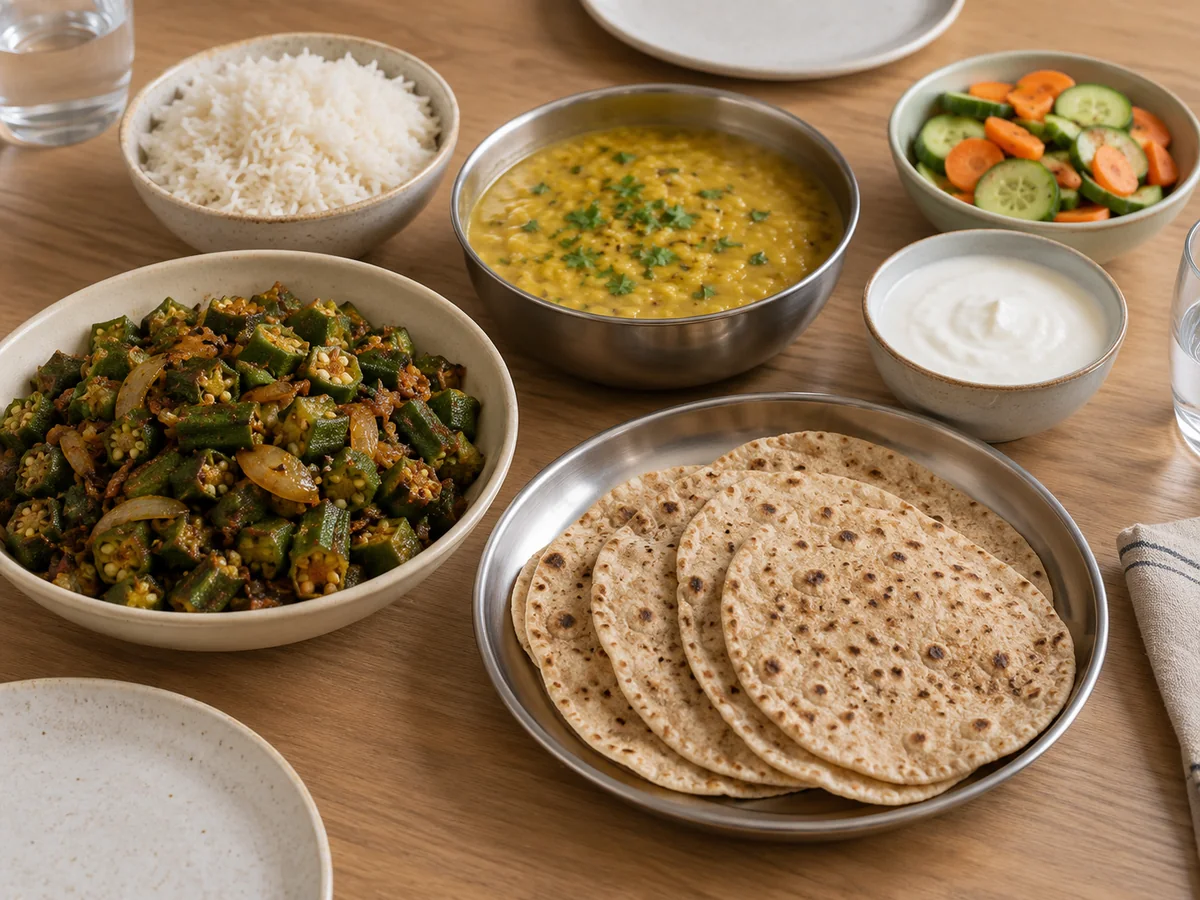
Give those days a familiar, easy meal. Dal and rice. Khichdi and curd. Egg bhurji and roti. Nothing clever. Save the new recipes for the easy days.
Choose a few shared dishes
You do not need a different menu every day. Write a short list of dishes everyone actually enjoys.
Two dals, three sabzis and one quick breakfast in rotation is a good start. Most happy kitchens run on a small list cooked well.
Put a task next to each meal
A plan works when somebody knows what to do. Next to each difficult meal, write one small task and a name. Soak the rajma. Chop the bhindi. Check the atta.
If one person carries every food job at home, the plan is also a kind way to ask for help. A clear, small task is easy to say yes to.
Shop from the plan
Check the kitchen before you add anything to the list. Group the list the way you shop: vegetables and fruit, dals and grains, dairy, then everything else.
Leave room for something you enjoy and for a change of plan. A shopping list is a tool, not a test.
Review one thing on Sunday
Ask one question: which meal was easier because we planned it? Keep that. Then ask which part was unrealistic, and change it before next week.
That is the whole method. A calendar, a short list of dishes, a few named tasks and one honest review.