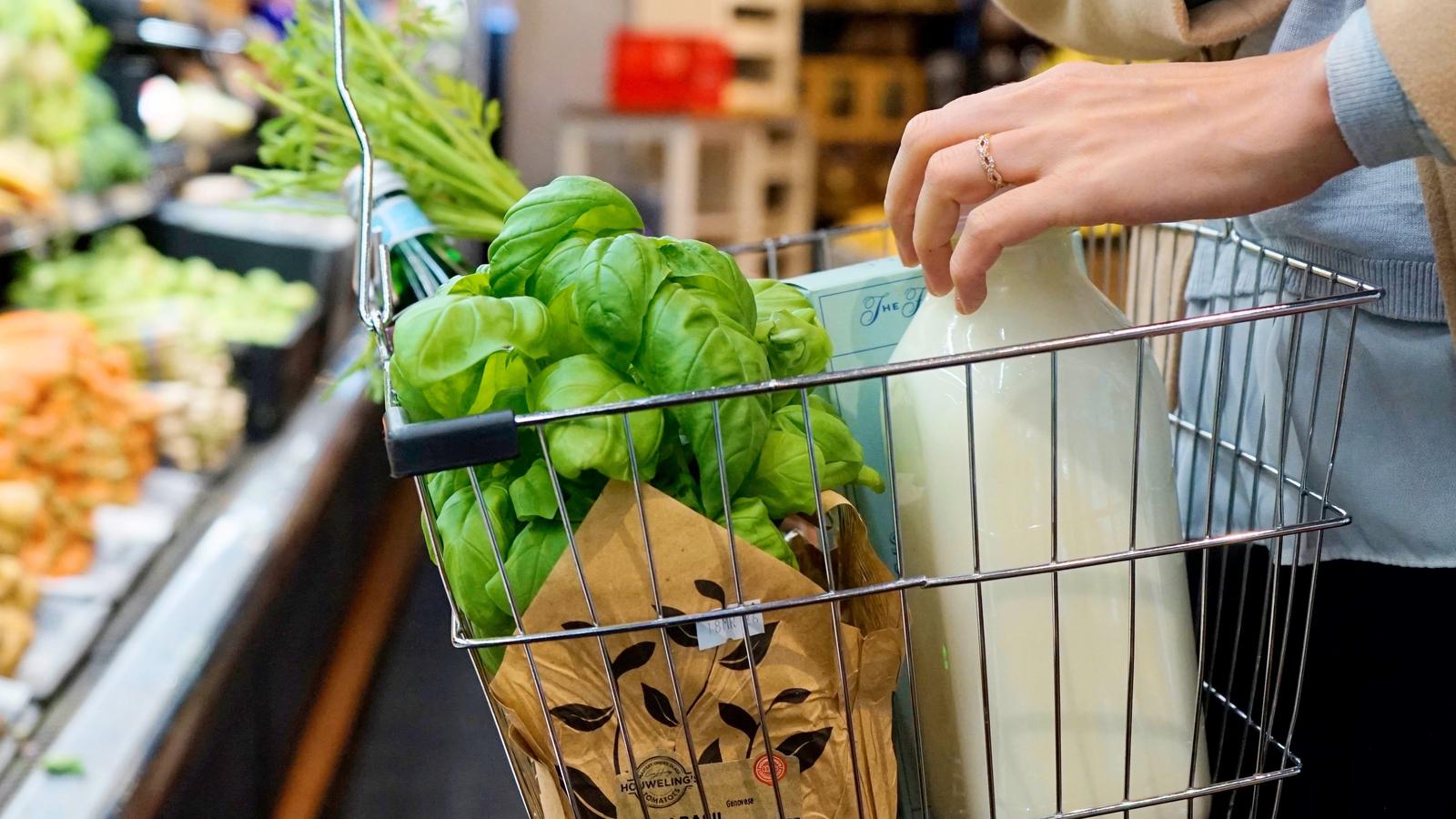
Most of us pick up a packet, glance at the front, and put it in the basket. The front is designed to catch your eye. The back is where the facts live.
You do not need a science degree to read a label. A few habits can help, with a quick calculation when serving sizes differ. India's food regulator, FSSAI, sets label requirements. ICMR-NIN also encourages shoppers to use label information when choosing food (Dietary Guidelines for Indians 2024, Guideline 17).
Here is how to use it on your next grocery run.
1. Find the serving size first, then look for per 100 g
Start with the heading above the numbers. Does it say per 100 g, per 100 ml, per serving or per pack? Do not assume that every table uses the same basis.
For foods requiring nutrition labelling, FSSAI permits nutrient information per 100 g, per 100 ml or per single-consumption pack, alongside per-serve percentage contributions to standard reference values. Serving size and the number of servings also matter (FSSAI Labelling and Display Regulations 2020, regulation 5(3)).
The serving on the pack may not match the amount you actually eat. If the table gives nutrient amounts for one serving and you eat two, double those amounts. Do not double a per-100-g figure unless you actually eat 200 g.
Use each basis for its own job:
- Per serving, if shown as nutrient amounts, helps you estimate what is in your portion. A percentage reference column is a different measure, explained below.
- Per 100 g or 100 ml makes comparisons easier. If that column is absent but a serving or pack weight is known, convert the figures to the same basis, as in the example below.
2. Read the ingredients from the top
Ingredients used in the greatest quantities at manufacture come first. Read the list from the top to see what the product is mainly made from.
A few things worth noticing:
- Look for the named oil. This helps you identify which edible oil was used.
- Check percentages for highlighted ingredients. Where a pack gives an oats or fruit percentage, use it to judge the front-of-pack claim. Disclosure rules have exceptions, so a picture alone does not tell you the amount.
- Sugar can appear under more than one name. Examples include sugar, fructose, corn syrup and molasses. Use the added sugars line in the nutrition table to check the amount; you cannot calculate it from ingredient order alone. Sweeteners such as maltitol belong to a different group called sugar alcohols (FDA explanation of sweeteners).
Reading the list is not about avoiding every long word. It is about knowing what you are buying, and picking the option that fits your plate better.
3. Check the allergen line, every time
If anyone at home has a food allergy, this is the most important line on the pack. FSSAI lists the foods that must be declared separately under "Contains". They are:
- cereals containing gluten (wheat, rye, barley, oats, spelt);
- crustaceans;
- milk;
- eggs;
- fish;
- peanuts and tree nuts;
- soy;
- sulphite at 10 mg/kg or more.
A "May contain" statement warns that an allergen could be present through cross-contamination.
Recipes change, so read the allergen line even on a brand you buy every week. Small amounts can cause serious reactions in people with an allergy (Eat Right India, Decode food labels).
4. Look at added sugar, not only total sugar
On foods requiring a nutrition table, look for total sugars and added sugars. The difference matters:
- Total sugars include sugars naturally present in foods such as milk or fruit, as well as sugars added during making.
- Added sugars are sugars put into a food or drink during making.
Plain curd or a fruit-only product can show some total sugar with little or no added sugar. A flavoured product may also contain added sugar; check its table.
The per-serve percentage column helps put amounts in context. Its standard adult references are 2,000 kcal energy, 67 g total fat, 22 g saturated fat, 2 g trans fat, 50 g added sugar and 2,000 mg sodium. These are label-comparison references, not targets you need to reach or a personal nutrition prescription. For example, 10% of the added sugar reference means 5 g in that serving.
5. Compare like with like: per 100 g, same category
This is the habit that changes what ends up in the basket. Compare:
- per 100 g, not per serve, because brands choose different serving sizes;
- within the same category: cereal with cereal, namkeen with namkeen, biscuit with biscuit.
Then look at three or four lines:
- added sugar: lower is the better pick;
- sodium: compare the amount and generally favour the lower option;
- fibre, if shown: a higher amount can be useful when comparing similar foods;
- saturated and trans fat: lower is better.
A worked example (ILLUSTRATIVE)
ILLUSTRATIVE EXAMPLE ONLY. These are selected, rounded figures for two fictional products, not complete regulatory labels or real brands. They show how to compare quantities.
Product A: flavoured breakfast cereal. Pack 450 g. Serving size 30 g. 15 servings per pack.
| Nutrient | Per 100 g | Per serve (30 g) | % of reference per serve |
|---|---|---|---|
| Energy | 390 kcal | 117 kcal | 5.9% |
| Protein | 8 g | 2.4 g | |
| Carbohydrate | 76 g | 22.8 g | |
| Total sugars | 22 g | 6.6 g | |
| Added sugars | 18 g | 5.4 g | 10.8% |
| Dietary fibre | 5 g | 1.5 g | |
| Total fat | 5 g | 1.5 g | 2.2% |
| Saturated fat | 1.5 g | 0.45 g | 2.0% |
| Trans fat | 0 g | 0 g | 0% |
| Sodium | 420 mg | 126 mg | 6.3% |
Illustrative ingredients: rolled oats (55%), sugar, wheat flakes, corn syrup, palm oil, dried fruit (4%), salt. Contains: Wheat, Oats. May contain: Milk, Nut.
Product B: same category. Pack 400 g. Serving size 40 g. 10 servings per pack. Selected figures from its per-serve column:
- energy 152 kcal;
- total sugars 4.8 g;
- added sugars 2.4 g;
- fibre 3.2 g;
- sodium 72 mg.
Step 1: put both on a per 100 g basis. Product B's serving is 40 g, so multiply its per serve numbers by 100 ÷ 40 = 2.5.
| Per 100 g | Product A | Product B |
|---|---|---|
| Energy | 390 kcal | 380 kcal |
| Total sugars | 22 g | 12 g |
| Added sugars | 18 g | 6 g |
| Dietary fibre | 5 g | 8 g |
| Sodium | 420 mg | 180 mg |
Step 2: read the result.
- Energy is almost the same.
- Product B has a third of the added sugar of Product A (6 g against 18 g).
- Product B has more fibre and less than half the sodium.
On the figures shown, Product B compares more favourably for added sugar, sodium and fibre. Check its ingredients and allergens too; these figures do not describe every aspect of the food or your needs.
Step 3: notice the trap. Look only at the per serve column and Product A seems "lighter" (117 kcal against 152 kcal). That is only because its serving is 30 g and Product B's is 40 g. Per 100 g tells the real story.
Step 4: check your own bowl. If you actually pour 45 g of Product A, that is 45 ÷ 30 = 1.5 servings. It gives 8.1 g of added sugar, or 16.2% of the 50 g reference. You do not have to change your bowl. Just know what is in it.
Front of pack claims: check them against the back
Words like "natural", "light", "sugar free" or "made with whole grain" are not the full picture. Compare the front claim with the ingredients and nutrition table. A food can be low in one ingredient and still contain substantial energy from others. Having whole grain as an ingredient also does not tell you how much processing the product has undergone.
Let the back of the pack decide.
A 30 second label routine
- Serving size and servings per pack.
- First three ingredients.
- The allergen line.
- Added sugar and sodium per 100 g.
- If you are choosing between two, compare per 100 g within the same category, and pick the one with lower added sugar and sodium and more fibre.
None of this means a packet is off limits. A label helps you choose the better option in each category, so that packaged food fits into a plate built mostly on dal, sabzi, grains, curd and fruit. If you want to see what that plate looks like, try our balanced thali tool. For keeping familiar home staples on the menu, read Keep the dal, roti and rice.
Want help with your own shopping list?
If you would like to go through the packets your family actually buys, and work out simple swaps that suit your home, you can book a consultation here. Families planning one menu for different needs may also find the family meal plan service useful.
FAQs
Should I compare foods per serve or per 100 g?
Compare similar foods on the same per-100-g or per-100-ml basis. Check the heading carefully: not every table has two nutrient columns. If only a known serving or pack amount is shown, divide each nutrient amount by that weight and multiply by 100. Use your actual portion to estimate what you will eat.
What is the difference between total sugars and added sugars?
Total sugars include sugars naturally present in the food and those added during making. Added sugars count the latter. Compare the added sugars line on the same quantity basis.
What does "May contain" mean on an Indian label?
Under FSSAI rules, a "May Contain" line can be used when an allergy-causing ingredient may be present due to cross contamination. If someone at home has that allergy, treat it seriously and speak to your doctor about what is safe.
Why do some packs have no nutrition table?
The regulations exempt some foods from mandatory nutrition labelling, such as unprocessed products that comprise a single ingredient, salt and salt substitutes, and certain plain teas and coffees. A 2026 amendment revises this list from 1 July 2027.
I buy groceries online. Can I read the label before I order?
Yes. FSSAI requires the mandatory label information to be provided before sale for food sold through e-commerce. Batch number and the dates (best before, use by, expiry and manufacture or packing) are the exception. Check those on the pack when it arrives.
Does "sugar free" mean low calorie?
No. Food can contain energy from fat, starch or other ingredients even when it has little sugar. Check the energy figure, ingredients and portion size rather than relying on the claim alone.
This article is general information about reading food labels. It is not medical advice. If you have a food allergy or a medical condition, follow your doctor's guidance.
Sources
- FSSAI, Food Safety and Standards (Labelling and Display) Regulations, 2020: Compendium, Version VIII, 9 Sep 2025 (regulations 4(2), 5(2), 5(3), 5(14)).
- FSSAI: list of amendments to the Labelling and Display Regulations, including the First Amendment Regulations, 2026, notified 24 Mar 2026 (in force 1 July 2027).
- Eat Right India (FSSAI): Decode food labels.
- ICMR-NIN: Dietary Guidelines for Indians 2024, Guideline 17.
- US FDA: Aspartame and Other Sweeteners in Food, used only for the scientific classification of maltitol as a sugar alcohol, not as Indian labelling law.