When people decide to eat better, they often begin with a new shopping list. Quinoa, oats, something in a packet with a long name.
Before you buy anything, look at the meals you already cook. A familiar kitchen is a strong starting point. You can find the ingredients, you know the recipes and you like the taste.
1. What is already on this plate?
Write down a normal lunch without judging it. The main dish, the sides, the drink, the little extras.
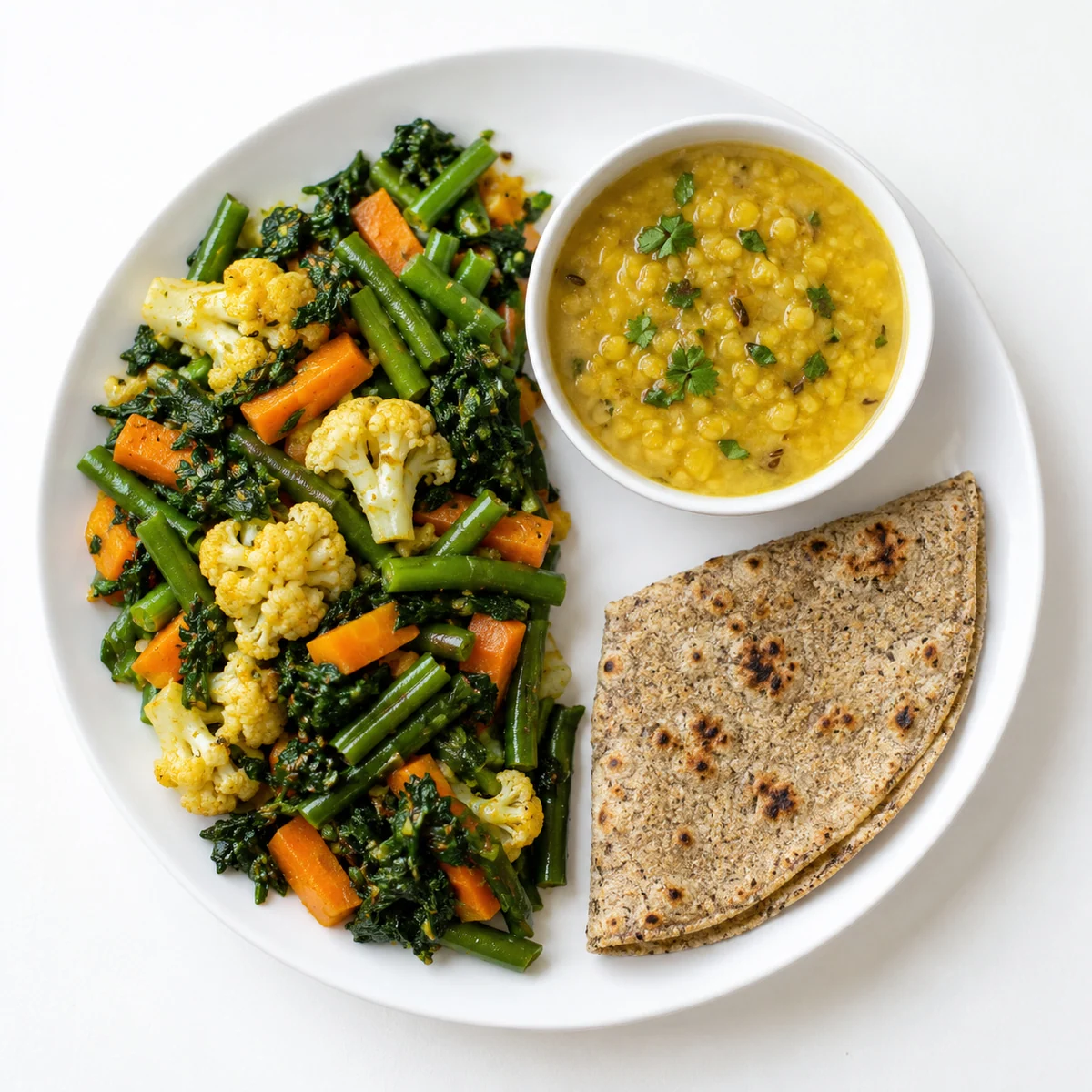
Now look for variety. Is there a dal or another protein? A vegetable? A grain? Some curd or salad? Most Indian home meals already have a good base. Often the plate needs a small shift in proportion, not a new menu.
2. What makes this meal easy or hard?
Maybe the food is fine but lunch happens at three. Maybe you cook for everyone and forget to pack your own dabba. Maybe mornings are simply too rushed.
Write the problem in plain words. "I need a lunch I can carry on office days" gives you something to plan. "I eat badly" does not.
Then pick the smallest change you can test this week. Pack the dabba the night before. Keep boiled chana in the fridge. Move dinner half an hour earlier.
3. Which questions need personal advice?
A health condition, a food allergy or a child's needs can change the answer. General tips are a start, but they are not written for you.
If someone has told you to avoid a familiar food, ask why, and what should replace it. Good advice makes sense in your kitchen and sits well with your doctor's care.
Start with your own day
Keep the dal, roti and rice. Look closely at one meal. Change one small thing. That is how a routine begins, and routines are what last.